Assignment: Kinetic Sculpture
For this week's assignment, we had to make a kinetic sculpture containing some circuitry (i.e. a motor) to move the sculpture. I was inspired by a middle school project I made of a DNA sculpture, and I wanted to make something with some cool geometric shapes. My initial sketches of this project had a couple of different mechanisms for making the helix, but despite all my planning, the double helix still didn't turn out exactly as I would have liked (maybe this is something I'll try again later).
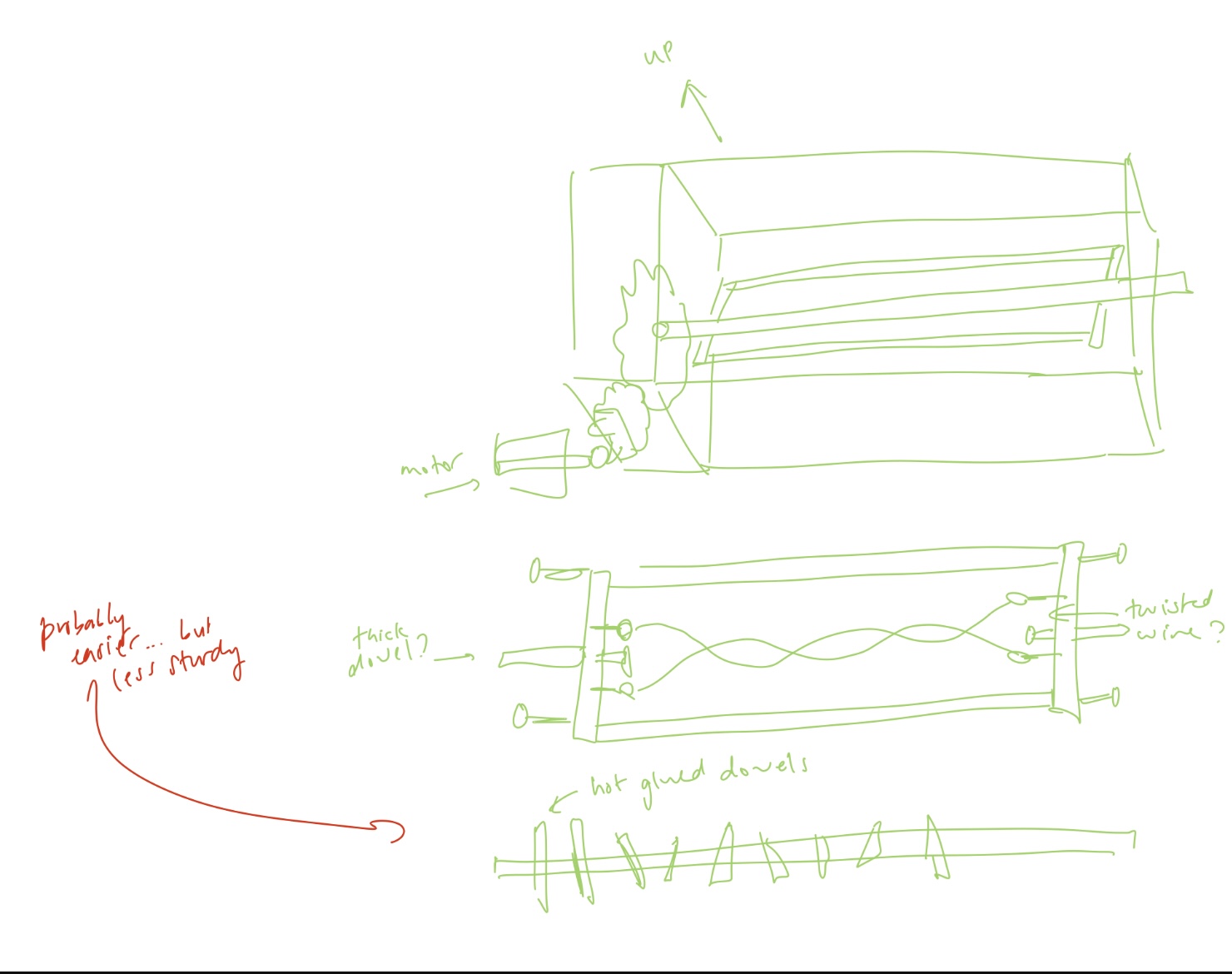
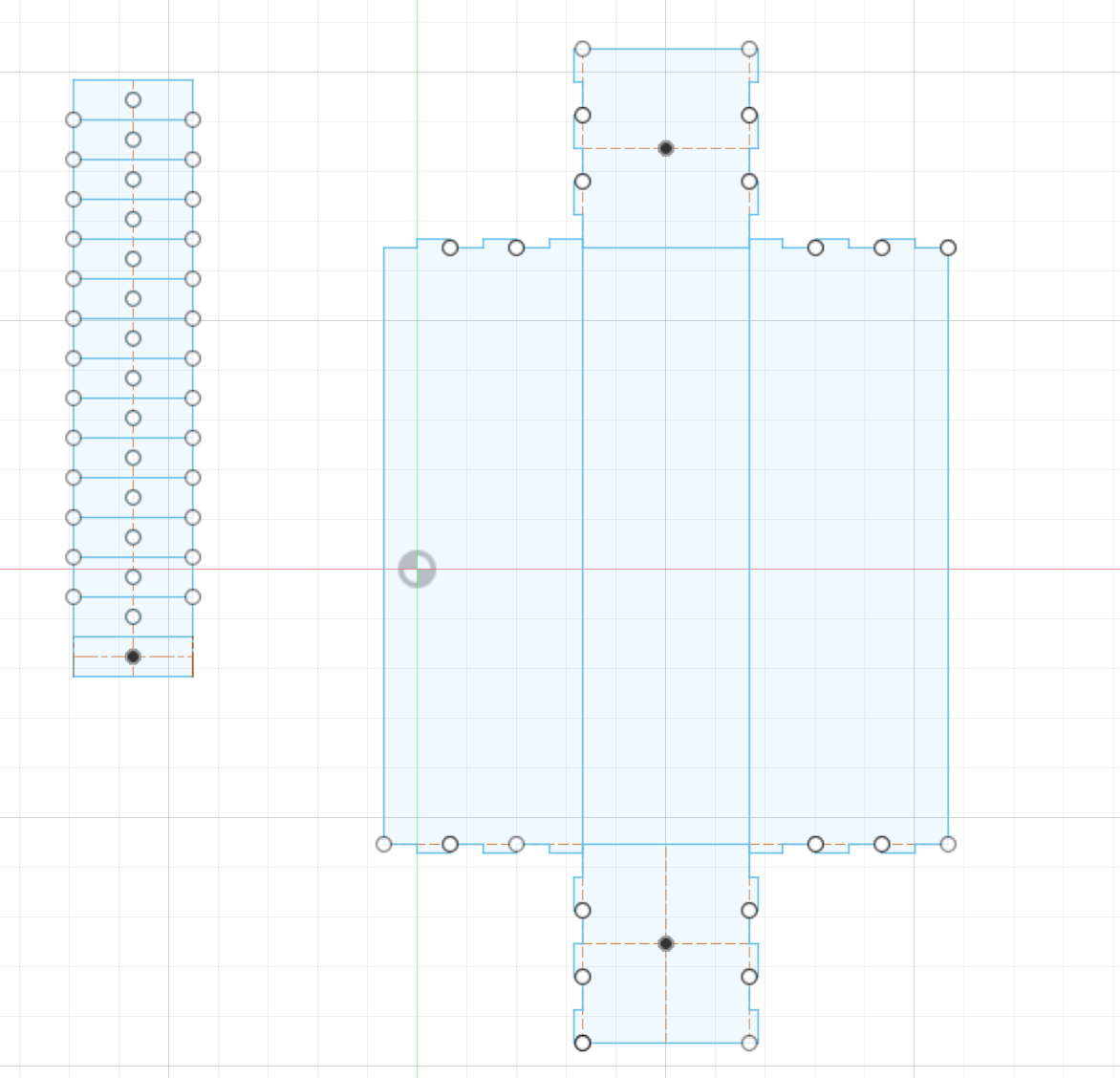
I ultimately chose the "easier" option and opted for a central rod with pieces of cardboard glued to it. I used our handy parametrically-designed finger-joint box template from last week to make the container for the sculpture. I also decided to cut small holes through the cardboard so the dowel could go straight through the cardboard (my original plan was to glue it flat onto the dowel). After digging around the shop, I found an appropriately-sized dowel. I then readjusted my parameters (this admittedly took longer than 30 seconds because things weren't fully constrained in my original design) and cut out the pieces on the laser cutter.
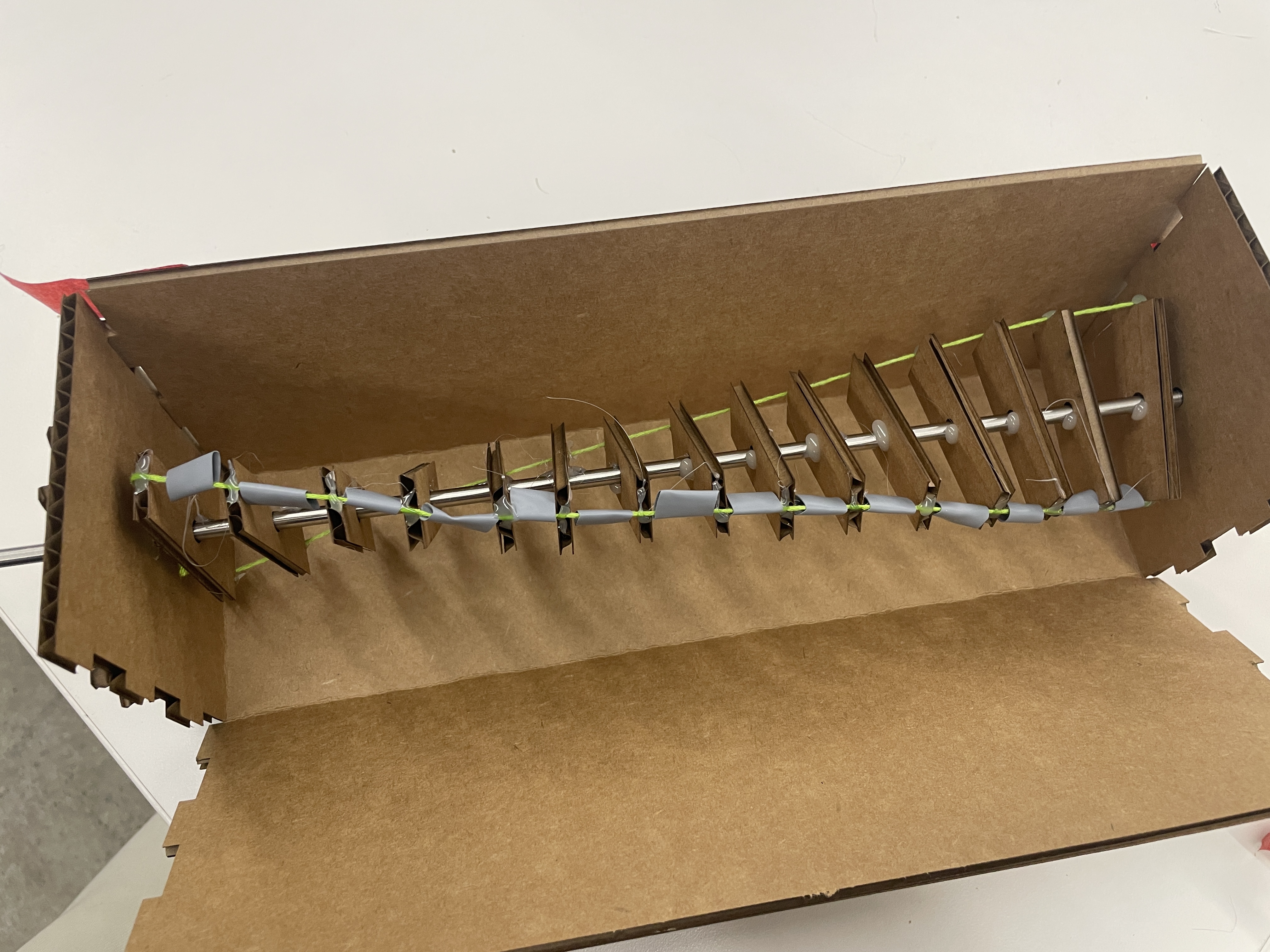
To make the double helix, I attempted to tape down the distances of the cardboard pieces, then twist the tape. But the tape was a bit stiffer than I expected (and the cardboard pieces were fairly close together), so I ended up just eyeballing how much to twist and using the distances on the masking tape to gauge how far apart to place the pieces. This worked ok, but my double helix definitely doesn't helix as much as I would like. On my next iteration, I'll likely drill holes through the cardboard pieces so I can thread some wire throughthem, then hot glue the distances [I'll just need a nice jig so I can hot glue the cardboard pieces to the dowel].
Since I originally wanted to make a fairly accurate model of DNA, I cut pieces of a thin balloon apart and attached this (and some string) to the sides of the helix as the deoxyribose phosphate backbone. But this looked really ugly so I ended up getting rid of the balloon bits.
Finally, I designed a couple of gears with the built-in spur gears in Fusion 360. I was a bit worried about the motor going too fast, so I made one of the gears smaller than the other. After consulting with Bobby and a couple of google searches, I realized I just had to keep the module the same between the two gears in order to ensure the teeth fit together. I also added a bit of backlash to the gears so they wouldn't be too tight (I had followed a tutorial on making gear models in Fusion 360, and the dude said it might be a good idea). I made sure the distance between the two gears was 60mm, since this was the distance I'd measured between where the two rods would be. I ultimately ended up with gears of module 5 and backlash 0.45, where one gear had 16 teeth and the other had 8.
I cut the gears out, secured my dowel with a bit of hot glue, then glued my gears in place. I then attached the motor (I had to add a little bit of a stool so that the gears wouldn't get stuck together), duck-taped everything down, and luckily everything worked!
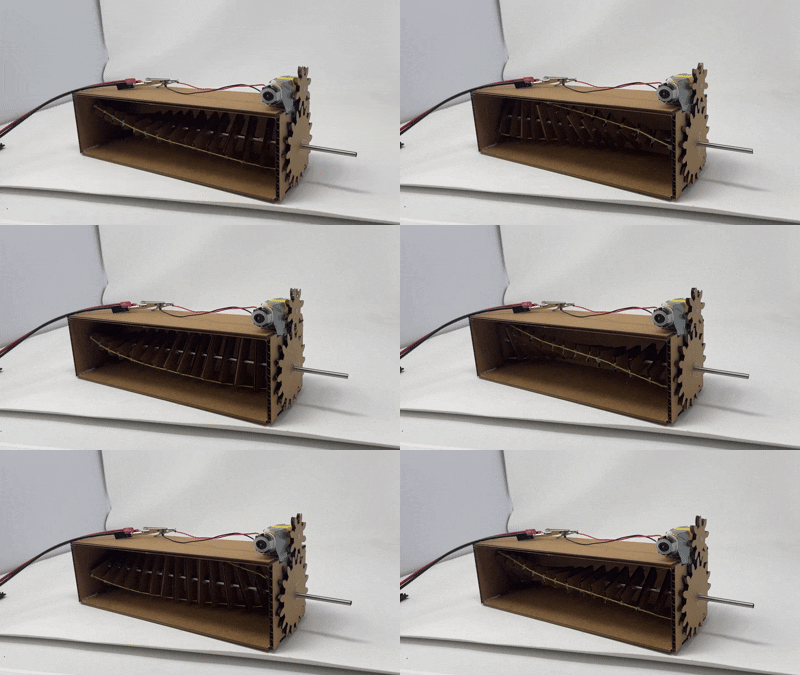
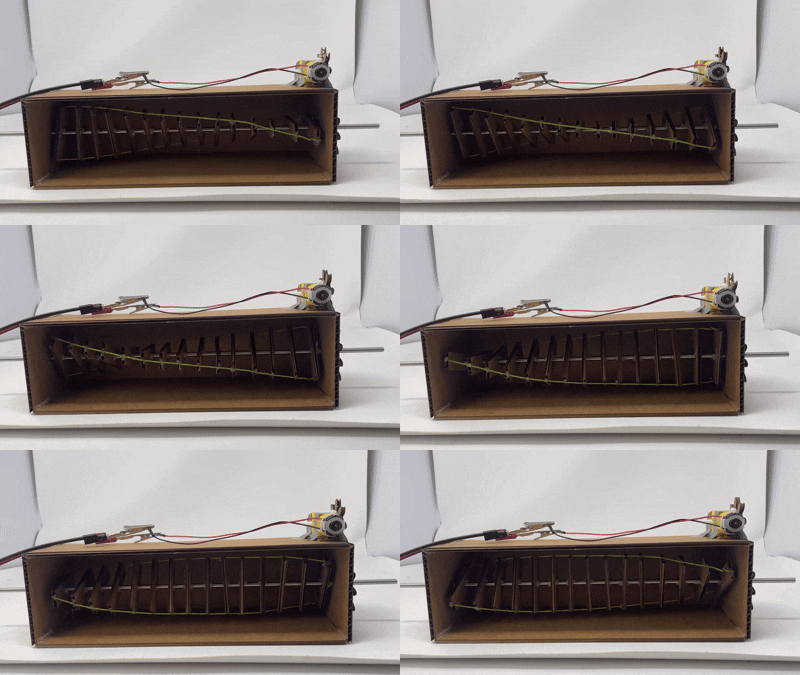
I'm pretty happy with this project turned out, and I'd definitely want to add more to it. Besides remaking the helix, I think it would be neat to try out some different materials & add more moving parts. I was thinking about adding a little cartoon Rosalind Franklin on top of the box, but I couldn't quite figure out how to do it in time.